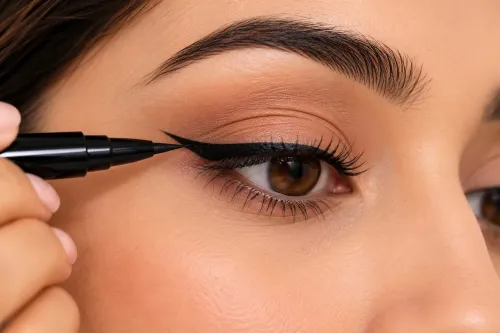
Eyeliner production changes completely with the format: a wax pencil is molded and cased, while liquid eyeliner is dispersed, deaerated and filled into an applicator package. By the end, you will know which formula, equipment, controls and supplier records to specify before approving a private-label batch.
Key takeaways
- Choose format before shade approval because equipment and testing change.
- Specify drying time, opacity, finish, transfer resistance and removal method.
- Request pigment-dispersion records and in-process performance checks.
- Validate packaging compatibility, stability and wear claims before launch.
Which Eyeliner Format and Formula Should You Specify?
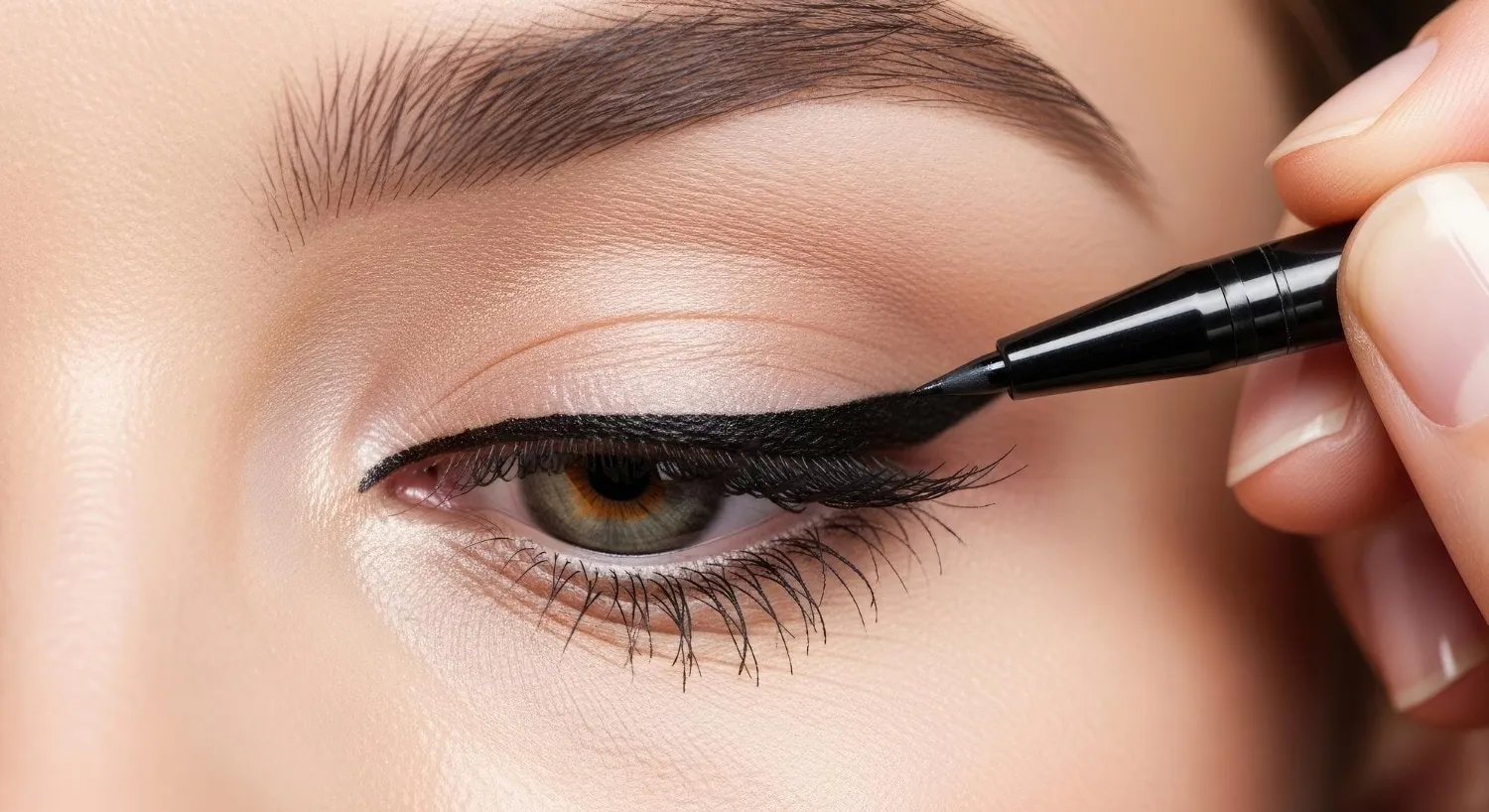
Choose the format before approving a shade: each route needs different equipment, packaging and performance tests. Your brief should name finish, opacity, drying time, water resistance, transfer resistance, removal method and applicator. The format also determines how eyeliner is made for private label brands.
| Format | Formula and manufacturing difference | Packaging and specification focus |
|---|---|---|
| Liquid | Aqueous or solvent-based vehicle with pigments, film-formers and rheology modifiers; requires dispersion, deaeration and controlled filling. | Bottle, wiper and brush or reservoir tip; check line output, settling, evaporation, leakage and tip blockage. Water-based formulas need a documented preservative and microbial-control strategy. |
| Gel | Gelled pigment system with waxes, oils or water-compatible polymers; needs controlled heating or high-shear mixing to achieve smooth pay-off. | Pot or pen cartridge; specify brush compatibility, dry-down time, transfer resistance and ease of removal. |
| Pencil | Waxes, oils, emollients and pigments are mixed, moulded or extruded, cooled and finished. | Wood or plastic casing; specify hardness, glide, sharpening behaviour, break resistance and eye-area comfort. |
| Felt-tip | Liquid ink formula feeds through a porous fibre tip, making viscosity and pigment load critical. | Sealed pen with reservoir and cap; test start-up, continuous flow, drying at the tip and cap evaporation. |
| Mechanical | A pencil-like wax or gel core is moulded and assembled into a retractable casing. | Specify twist mechanism, core diameter, breakage resistance and controlled pay-off. |
| Cake | Pressed pigment powder is activated with water or a mixing medium before brush application. | Pan or compact; specify press hardness, dusting, activation time and rewetting behaviour. |
Ask the manufacturer to quote the format, applicator, filling method and process controls—not only the shade and order quantity.
What Happens During the Eyeliner Production Process?
The eyeliner production process starts with an approved brief, not a shade name alone. It must identify the format, formula, finish, applicator, pack, fill size, performance targets and applicable market requirements before purchasing begins.
1. Confirm the formula and packaging specification. Match pigments, film-formers, waxes, oils, solvents, thickeners and preservatives to the chosen pencil, liquid, felt-tip, gel-pot or cake format.
2. Receive and quarantine the raw materials and packaging. Check supplier documents, lot numbers, identity, appearance and quantities before releasing components to production.
3. Weigh each ingredient against the master batch record. Record the raw-material lot, quantity, operator and equipment used; a weighing error can change opacity, drying time or hardness.
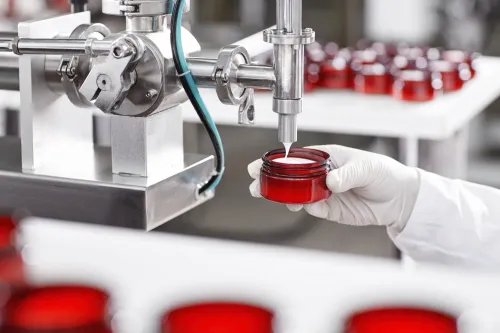
4. Make the bulk through the format-specific route. Melt waxes and oils for pencils, disperse and mill pigments, remove entrained air, then fill molds or slugs and cool them under controlled conditions. For liquid and felt-tip products, blend the liquid bulk and fill bottles or reservoirs before inserting the wiper and tip.
Heat, mix and fill gel into pots; blend and press cake eyeliner into pans.
5. Test and release the bulk before filling the final quantity. Record processing temperatures, mixing or milling times, appearance and required checks.
6. Clear the line before filling. Remove the previous shade, reconcile components and inspect equipment, because residual pigment can visibly contaminate the next batch.
7. Fill, close, assemble and code each unit. Apply caps, barrels, sharpened pencil components or cartons, then inspect fill weight, closure, print, leakage and presentation.
8. Reconcile finished units against the batch record, approve dispatch documentation and ship under conditions that protect the product and packaging. These are the core eyeliner manufacturing steps.
How Do Pigment Dispersion and In-Process Checks Protect Performance?
A consistent line depends on pigment dispersion, not simply the colour formula. During the eyeliner manufacturing steps, the manufacturer wets pigments before high-shear mixing or milling, then combines them with the vehicle, film-formers and rheology modifiers. Deaeration removes bubbles that cause skips, while controlled viscosity helps prevent settling, clumping and uneven flow.
1. Confirm each pigment lot, weighed quantity, mixing speed, temperature and processing time against the approved batch record. Clean equipment and documented line clearance prevent residue from a previous shade creating visible cross-contamination.
2. Test the bulk before filling for appearance, shade against the approved standard, viscosity and homogeneity. For aqueous liquid eyeliner, check pH; for wax or anhydrous formulas, inspect hardness, oil separation and consistency after controlled cooling.
3. Run an applicator check using the actual bottle, wiper, brush, felt tip, reservoir or pencil casing. Look for a continuous line, even opacity, correct drying behaviour and no blocked tip, drag, skipping or excessive product release.
4. Sample filled units throughout the run, not only at the start. Check fill weight or volume, shade, closure fit, leakage, cap evaporation and line output, then reconcile issued components with accepted, rejected and returned units.
A release record should connect raw-material and dispersion lots to bulk results, fill checks and packaging-component lots. If the filled shade differs from the approved standard, do not correct it by eye; quarantine the batch, investigate mixing, weighing, cleaning and filling records, and approve it only after documented review.
How Are Packaging, Stability and Wear Claims Validated?
A finished eyeliner is the test article, not the bulk formula. The bottle, wiper, brush or felt tip controls dose, evaporation, tip drying, leakage and line consistency; a pot changes air exposure, while a pencil or mechanical casing affects hardness, sweating, cracking, sharpening and pay-off.
Test the assembled pack because solvent loss, swelling, staining and migration can remain invisible in an open laboratory sample.
- Liquid pack: Test the bottle, wiper, brush and cap together for seal integrity and dose control. Water-containing formulas need a documented preservation strategy, preservation-efficacy testing and finished-product microbiological testing.
- Felt-tip pen: Check ink flow after storage, repeated opening, cap-off exposure and application across the intended line length. A drying tip can make a stable bulk formula fail in use.
- Gel pot: Measure skin formation, evaporation and brush loading after repeated opening. The closure must limit contamination without changing the gel’s consistency.
- Pencil or mechanical casing: Test cracking, sweating, sharpening, retraction and pay-off after temperature cycling. Cooling rate and fill temperature can change hardness.
Waterproof, smudge-proof, transfer-resistant, long-wear and fast-drying are performance claims, not ingredient claims. Define the method and pass limit using the finished formula and applicator under moisture, sebum, rubbing and timed wear conditions; a film-former in the ingredient list proves none of them. Record compatibility and claim results by pack format.
How Should You Qualify a Private-Label Eyeliner Manufacturer?
A low quote proves little if the supplier cannot show that the licensed site makes your format. For an eyeliner factory in Delhi, inspect the manufacturing licence, permitted product category, site address, GMP records and the equipment used for private label eyeliner production.
A trading office, sample room or contract packer is not proof of manufacturing control.
Request these records before approving samples:
- Current manufacturing authorization and site details matching the quotation and batch documents.
- Cosmetics Rules, 2020 compliance evidence for ingredients, labels, product records and GMP arrangements.
- ISO 22716 certificate, if offered, then verify its scope and certificate holder; it does not prove product safety or marketability.
- Test reports for shade, viscosity or hardness, pay-off, drying, transfer resistance, microbial limits and preservative efficacy for water-containing liquid formulas.
- Stability protocols and results using the final bottle, wiper, brush, felt tip, pot or pencil casing, including real-time and accelerated conditions.
- Batch records showing raw-material lot numbers, weighing, dispersion, filling, assembly, release approval and retained samples.
- Written disclosure of subcontracted filling, testing or packaging, with responsibility defined in the quality agreement.
| Record type | What to inspect | Warning sign |
|---|---|---|
| Site | Licence address and permitted category | Different address or vague category |
| Testing | Named method, sample, date and result | “Passed” without data |
| Traceability | Material lots linked to finished batch | Missing reconciliation |
SHEEBA COSMETICS INDIA should be assessed by the same evidence, not by location alone. If you sell overseas, check EU, US or destination-market rules separately.
Related product
Frequently asked questions
Which eyeliner details should a private label brief specify?
Name the format, finish, opacity, drying time, water resistance, transfer resistance, removal method, applicator and target shades.
What are the main eyeliner manufacturing steps?
The process covers raw-material preparation, pigment dispersion, formula batching, milling or homogenisation where required, filling, assembly, inspection and finished-product testing.
Why does pigment dispersion matter in eyeliner?
Uniform dispersion supports consistent colour, opacity, line smoothness and shade matching. Poor dispersion can cause settling, streaks, clumps or uneven payoff.
How are eyeliner wear and packaging claims validated?
Test the filled pack for compatibility and stability, then assess application, drying, transfer, water resistance, removal and wear against the claims you plan to publish.
How should you qualify a private-label eyeliner manufacturer?
Review its equipment, batch documentation, in-process checks, finished-product testing, packaging controls, sample approval process and ability to produce your specified format.
Related product
 | Eyeliner Eyeliner Manufacturing at Sheeba Cosmetics T-2/199, Mangolpuri Industrial Area, Phase-1, New Delhi – 110083 Introduction When it comes to defining beauty with... |
Keywords