Choose the primer by skin condition, finish, foundation compatibility and the weather in which customers will wear it—not by texture alone. By the end, you can select a first SKU, define its performance tests and brief a manufacturer without paying for unnecessary variants or unsupported claims.
Key takeaways
- Match the primer to one customer problem, such as oil, dryness or visible pores.
- Test primer and foundation together for pilling, separation, transfer and wear.
- Launch one SKU only when its finish suits your core customer and climate.
- Ask the manufacturer for licence records, test data, claims support and landed cost.
Match the primer type to the customer’s skin problem
Start with the customer problem, not the ingredient list. Choose the formula family that solves one clearly defined need, then test it on the skin conditions your brand actually targets.
| Type | Best fit | Main risk |
|---|---|---|
| Silicone-based blurring | Normal, combination or textured skin needing slip and soft focus | Silicone elastomers feel smoother immediately than dimethicone alone, but can pill over film-forming skincare, excess powder or thick sunscreen |
| Water-based hydrating | Dry, dehydrated or normal skin | It does not replace moisturiser and can leave oily skin looking slick |
| Mattifying | Oily or combination skin needing controlled shine reduction | Excess powder increases drag, highlights flakes and makes foundation break up on dehydrated skin |
| Illuminating | Normal or dry skin seeking a glow | Pearl can exaggerate visible oil and texture |
| Gripping | Users prioritising foundation adhesion | A tacky film can feel uncomfortable, collect dust or cause patchiness when over-applied |
Acne-prone customers need lightweight, non-irritating, fragrance-controlled formulas and careful wear testing. No primer claim makes a product an acne treatment. Sensitive skin calls for a short, transparent ingredient list and irritation testing instead of a heavily fragranced sensory formula.
Match the primer to the finish your foundation range needs. A matte primer under full-coverage matte foundation can look flat, while a natural primer preserves controlled wear; illuminating formulas suit sheer, satin or skin-like bases but can make an oily T-zone greasy. Test the intended moisturiser, sunscreen, primer and foundation together.
A primer supplier for makeup brands should define the target user before proposing ingredients, because one formula rarely serves very oily, very dry and sensitive customers equally well.
Make the finish and foundation work as one system
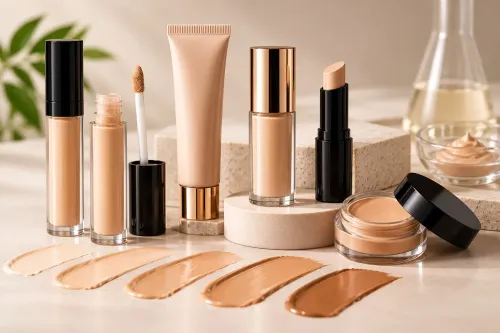
Choose the primer finish from the foundation and concealer range you already plan to sell, not from the primer’s texture alone. A matte primer under full-coverage matte base can look flat and expose dry patches; a natural primer gives controlled wear with less powder drag.
| Finish | Best pairing | Main risk |
|---|---|---|
| Matte | Full-coverage matte foundation and concealer | Flatness, flaking and extra drag |
| Natural | Multiple foundation finishes, including matte | Less dramatic shine control |
| Dewy or illuminating | Sheer, skin-like or satin base products | Strong pearl can make an oily T-zone look greasy |
Natural is the safest first finish when your range includes several base finishes. A private label primer in Delhi must also survive both humid heat, which increases greasiness, and dry winter air, which exposes tightness and uneven texture.
Do not reject or approve compatibility from “silicone-based” or “water-based” wording alone. Test the intended moisturiser, sunscreen, primer, foundation, concealer and setting product together; inspect for pilling, patchiness, separation and uneven wear immediately and after several hours.
- Apply skincare and let it settle.
- Apply sunscreen and wait until its film is no longer wet.
- Press a pea-sized amount of primer only where needed, using less around the nose and eyes.
- Wait 30 to 60 seconds, then press foundation on with a sponge or brush instead of rubbing.
A blurring primer is not a moisturiser. Spreading it over the whole face wastes product and can increase rolling, especially over heavy skincare, powder or film-forming sunscreen.
Decide whether one launch SKU can serve the market
Launch one universal primer only if your target customer has a narrow skin profile and the formula performs acceptably on both oily and dry areas. Universal formulas often suit normal or combination skin while disappointing very oily users who need sebum control and very dry users who need cushion.
| Positioning | Best first fit | Main risk |
|---|---|---|
| Natural hydrating | Normal, dry or mildly dehydrated skin | Looks slick on oily skin |
| Controlled blurring | Normal, combination or textured skin | Pills over heavy skincare or sunscreen |
| Moderate mattifying | Oily or combination skin | Powder load increases drag and highlights flakes |
| Glow-focused | Normal or dry skin | Exaggerates shine and texture on oily areas |
With limited budget, testing capacity or minimum order quantity, choose one clearly positioned base rather than several near-identical SKUs. Add an oily-skin or glow-focused variant only after customer research, foundation sales or wear trials show a distinct need. Every variant adds a stability file, packaging decision, artwork review, raw-material inventory, batch minimum and claims burden.
Compare the primer with products customers already own. Moisturiser supplies emollience, sunscreen supplies UV protection, setting spray changes the finished film and gripping products prioritise adhesion. If the foundation wears well over the brand’s moisturiser and sunscreen, document a specific improvement in wear, texture or shine before adding primer.
Test in Delhi’s hot, humid periods and dry winter. Heat and humidity expose greasiness and emulsion stress; winter reveals tightness, flaking and powder drag. A successful five-minute trial proves very little.
Qualify the Delhi manufacturer before approving the formula
Approve the formula only after the Delhi site proves it can legally and repeatedly make your exact primer, not because a supplier calls itself an OEM.
| Option | What to verify | Failure if missing |
|---|---|---|
| Actual licensed plant | Current Cosmetics manufacturing licence under India’s Cosmetics Rules, 2020; primer category coverage; site address matching the production site | You cannot confirm who legally manufactures the batch |
| Loan-licence route | Name the licensed facility and document the loan-licence arrangement | The marketed supplier may not control production |
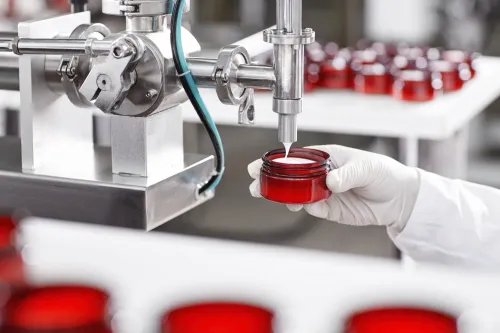
| Production capability | Pilot or first industrial batch using intended homogenisation, heating, cooling and filling | A hand-mixed laboratory sample may not reflect factory performance |
Ask the primer manufacturer for cosmetic brands in Delhi for:
- Formula or INCI declaration
- Raw-material specifications and certificates of analysis
- Total microbial results and stability protocol
- Packaging-compatibility results
- Batch-size range and filling tolerances
- Change-control procedure
For an emulsion or water-containing primer, request a preservative-challenge test as well as total microbial results. Ask how ISO 17516 limits are applied to a leave-on face product and which objectionable organisms are excluded; a clean first batch does not prove protection after repeated use.
Match the pack to the formula: tube, pump or airless. Test leakage, clogging, pump recovery, weight loss, odour change and separation during storage and transport. SHEEBA COSMETICS INDIA belongs in the comparison only if it supplies this evidence for your exact formula and pack, rather than relying on a familiar supplier label.
Related product
 | Primer Primer Manufacturing at Sheeba Cosmetics 📍 T-2/199, Mangolpuri Industrial Area, Phase-1, New Delhi – 110083 Introduction In the world of cosmetics, face... |
Approve performance, claims and landed cost before launch
Turn the preferred primer into measurable specifications before placing a commercial order. Record the finish, skin target, application amount, 30–60-second waiting time, wear duration and permitted changes in shine, transfer, pilling, patchiness and separation.
| Claim or decision | Evidence to require | Example acceptance threshold |
|---|---|---|
| Oil-control | Instrumental gloss readings at baseline and six hours on an oily-skin panel | No more than 20% increase in forehead and nose gloss |
| Long-lasting | Controlled six- or eight-hour wear panel with fixed foundation layers | At least 80% of panellists rate coverage as intact |
| Poreless | Standardised before-and-after photographs under fixed lighting | Two trained assessors approve visible softening without blur artefacts |
| Sweat-proof | Controlled heat-and-humidity wear test plus blotting and transfer test | No visible streaking and no more than 10% foundation transfer |
Document panel age, skin type, climate, skincare layers, foundation, application dose, lighting and scoring scale. Test the filled tube, pump or airless pack—not bulk formula alone—after high-temperature and high-humidity storage, then repeat wear testing in Delhi’s dry season.
Calculate landed cost by adding development fees, pilot charges, testing, packaging components, filling loss, minimum order quantity, artwork changes, rejected units and rework to the quoted bulk price. Ask a third-party primer manufacturer in Delhi how reformulations, raw-material substitutions and pack changes receive written approval and enter change-control records.
Launch one bounded promise and a pack that dispenses the correct dose. Add mattifying, illuminating or gripping variants only after measured customer evidence identifies a gap. Verify the final label, claims, batch code, net quantity, licence details and expiry information before artwork approval.
Frequently asked questions
How should a new brand match primer type to its customers?
Define one primary skin problem first, then choose a formula family for oil control, hydration, pore blurring or grip. Test it on the skin conditions your target customers have.
Why must primer and foundation be tested as one system?
Different bases can pill, separate, ball up or change the foundation finish. Test the primer with each planned foundation texture and record application, wear, transfer and compatibility results.
Can one primer SKU serve a new makeup brand’s whole market?
Use one SKU when its finish suits your core customer and works across the foundation range. Add another SKU when oily, dry or finish-specific needs create clear performance conflicts.
What should you check before choosing a Delhi primer manufacturer?
Request the manufacturer’s licence copy, formula specification, ingredient and allergen information, stability and microbiological test records, packaging details and batch traceability process.
What must be approved before launching a private-label primer?
Approve tested performance, evidence for every product claim, pack and label details, minimum order requirements, lead time, sampling costs and the complete landed cost.
Keywords