A Delhi salon can sell cosmetics under its own brand without building a factory, but the salon must separate brand ownership from licensed manufacture. By the end, you will know which launch route fits your salon, what to prepare before requesting quotations, which products make a sensible first range, and how to check that the finished packs can legally reach customers.
Key takeaways
- Own the brand while a licensed manufacturer makes the cosmetics.
- Choose a focused launch range that matches your salon’s services.
- Prepare formulas, pack sizes, quantities and artwork before requesting quotes.
- Verify the manufacturer’s Form COS-8 or COS-9 before signing.
Can a salon legally sell cosmetics under its own name?
Yes. A Delhi salon can own the brand, approve the packaging and sell finished cosmetics while an appropriately licensed manufacturer makes them. This is the usual route for own brand cosmetics for salons: the salon owns the commercial identity, not necessarily the factory. The licence follows the manufacturing premises, not the salon’s address.
- Ask for the manufacturer’s current licence, licensed address, permitted product categories and batch-coding system.
- Confirm that the site applies to the State Licensing Authority in Form COS-5 for a licence in Form COS-8, or uses Form COS-6 for a loan licence in Form COS-9.
- Check the authority in the state where the factory operates; it need not be Delhi.
The label must name the cosmetic, net contents, batch or lot number, expiry or use-before information, manufacturer, manufacturing address and manufacturing licence number. Your brand name cannot replace the licensed manufacturer’s identity. Review the artwork under both the Cosmetics Rules and the Legal Metrology (Packaged Commodities) Rules, 2011, including net quantity, MRP and consumer-care declarations.
Keep claims to beautifying, cleansing or altering appearance. Treatment, prevention or cure claims can change the regulatory position. “Chemical-free,” “100% safe,” “permanent,” “hypoallergenic,” “non-comedogenic” and “waterproof” need evidence, such as a defined test method or substantiation file, before you print them.
Which products and launch model suit your salon?
Choose the commercial model before choosing shades. If you want to start your own cosmetic brand for salons in Delhi, compare these routes first:
| Option | Control | Trade-off |
|---|---|---|
| Reselling | Manufacturer controls formula; existing brand controls packaging and claims | Least development, but the salon does not own the brand |
| Private label | Salon controls artwork, selected shades and reorder terms around an existing or adapted formula | Faster launch with limited formula control |
| Contract manufacturing | Salon controls formula, specifications and packaging | More development time, approvals and documentation |
Decide whether your own brand cosmetics for salons are for professional back-bar use, retail sale, or both. Selling the same pack to clients still requires ordinary labelling, safety and manufacturing compliance; “professional use” does not remove those duties.
Test demand against five facts:
- Regular client traffic
- Visible retail space
- Staff confidence recommending products
- Cash available for inventory
- Expected reorder speed
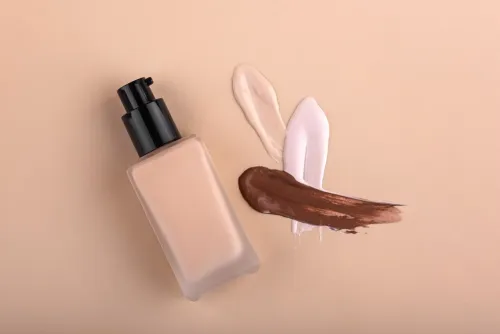
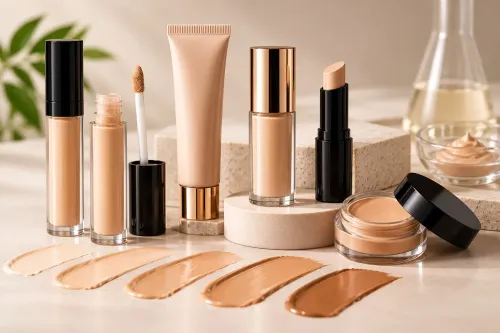
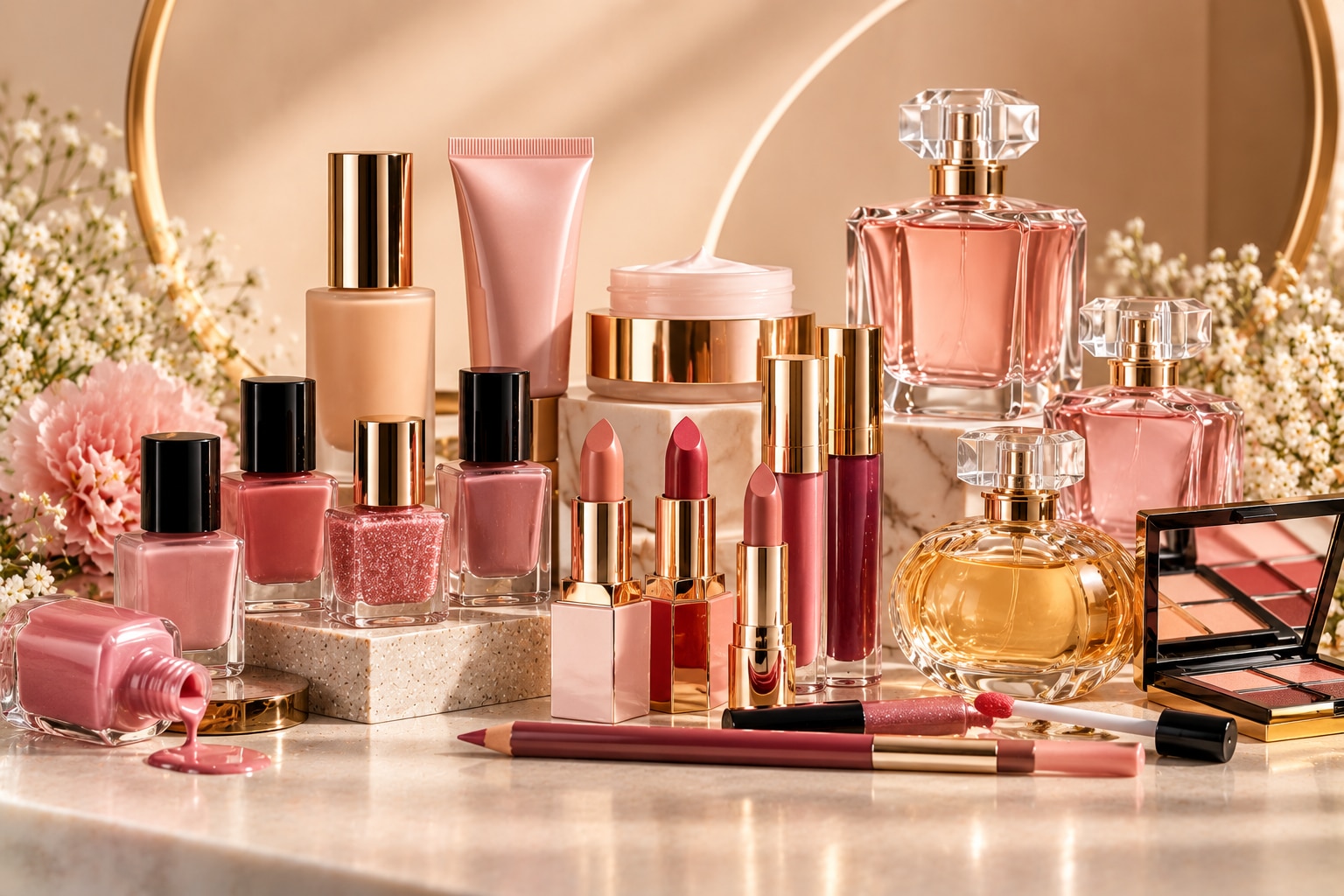
Start with one or two hero categories. Lipstick and liquid lipstick are easier to merchandise by shade; foundation and concealer need broader complexion matching and create more dead stock. Nail polish needs many colours, testers and display space. Skincare adds formula, stability, preservation and claim complexity.
Choose pack sizes from actual client usage, not the largest container available. A small, fast-moving range gives staff a clearer recommendation and leaves less cash trapped in unsold stock.
What should happen between the first idea and the first sale?
The first sale should be designed before samples are ordered. Write a product brief naming the target client, intended use, finish, texture, shade family, pack size, retail or professional purpose and acceptable price position.
Keep the first range narrow: choose hero products staff can demonstrate, select shades supported by client history and set a test quantity that protects cash flow; an unsupported minimum order is not a safe sales forecast.
Request a sample for every proposed shade. A red lipstick does not validate a nude, blue or glitter shade. Compare pigment identity or Colour Index information, permitted-colour status, concentration, texture, odour, coverage, drying time and packaging compatibility.
| Sample check | What it proves | What it does not prove |
|---|---|---|
| Red lipstick | Red-shade formula and pack work | Nude, blue or glitter performance |
| Nude lipstick | Nude pigment, coverage and undertone | Red-shade stability |
| Glitter shade | Particle dispersion and pack compatibility | Other shades’ microbial or colour control |
Use this approval sequence:
- Sign the approved sample or specification sheet.
- Approve final artwork before bulk production.
- Create testers, train staff on application and permitted claims, photograph the actual pack, assign storage space, record opening inventory and prepare a complaint process.
Keep a development file containing the master formula, raw-material and packaging specifications, batch manufacturing and packing records, finished-product test results, stability information and retained samples. These records support investigations into shade drift, separation, odour change, microbial failure and complaints.
That discipline turns salon private label cosmetics in Delhi from a packaging exercise into a controlled launch.
What must you prepare before requesting a quotation?
To start your own cosmetic brand for salons in delhi, prepare a commercial brief before requesting a quotation. Include:
- Legal business name, billing and delivery addresses, contact person and proposed brand name
- Product list, intended use, shade names or colour references, pack sizes and target quantity
- Packaging choice, label language, launch date and delivery location
- Whether you need stock packaging, custom components, testers or display units
Ask the supplier to separate every cost line:
| Cost line | What to request |
|---|---|
| Manufacturing | Per-unit price and batch size |
| Development | Formula work, colour matching and samples |
| Packaging | Components, moulds, plates and rejected units |
| Branding | Artwork, artwork changes and labels |
| Compliance | Testing and regulatory review |
| Logistics | Freight and applicable taxes |
Budget separately for storage, photography, staff training, salon sampling and unsold inventory. Confirm who pays for moulds, plates, colour matching, artwork changes and rejected components.
Agree in writing on payment stages, sample-approval rules, lead time, batch size, shelf life at delivery, damaged-goods handling and reorder terms. Your first order should test demand, not cover every shade.
Compare the cash tied up in stock with the client purchases needed to fund the next reorder; custom cartons, shade-specific components, freight and testers can make a low manufacturing quote expensive.
How do you verify a cosmetic brand manufacturer before signing?
1. Ask the proposed cosmetic brand manufacturer for salons in Delhi to show the actual manufacturing licence, licensed premises address, permitted product categories and batch-coding process. Match the licence to the site where your products will be made and packed.
2. Confirm that the activity is true manufacture or approved packing at that premises. Simple rebottling or relabelling outside the licensed scope is not a substitute for documented manufacturing control. Ask who traces each batch to raw materials and finished packs.
3. Put the division of responsibility in the private-label or contract-manufacturing agreement. The manufacturer remains responsible for manufacturing under the Cosmetics Rules; your salon must control approved artwork, claims and specifications, plus complaint handling and recall arrangements. Record ownership of the formula, shade developments, artwork files, test reports, retained samples and reorder rights.
4. Request the applicable product standard before approving the formula, including any relevant Bureau of Indian Standards specification. Ask how the site checks microbial quality, heavy-metal limits where applicable, shade consistency, stability and packaging compatibility. Each shade needs appropriate control, not approval based on one sample.
5. Require the development file to include the master formula, raw-material and packaging specifications, batch manufacturing and packing records, finished-product test results, stability information and retained samples. Ask to see the complaint and recall process before signing.
A quotation saying “private label” proves none of this. SHEEBA COSMETICS INDIA belongs on your comparison list only after its proposed premises, scope and documents match your brief. That discipline makes salon private-label cosmetics in Delhi a controlled retail test rather than unverified relabelling.
Related products
 | Start Your Own Cosmetic Brand Start Your Own Cosmetic Brand in India with Sheeba Cosmetics Starting your own cosmetic brand in India has never been easier. View product → |
 | Liquid Lipstick Premium Liquid Lipstick Manufacturing by Sheeba Cosmetics 📍 T-2/199, Mangolpuri Industrial Area, Phase-1, New Delhi – 110083 At Sheeba Cosmetics, we... View product → |
Frequently asked questions
Can a Delhi salon legally sell cosmetics under its own name?
Yes. The salon can own the brand, approve packaging and sell finished cosmetics while an appropriately licensed manufacturer produces them. The manufacturing licence applies to the manufacturing premises, not the salon address.
Which products and launch model suit a salon?
Start with products that match your salon’s services and customer routines, then choose private label, custom formulation or a smaller pilot based on budget, minimum order quantity and development time.
What should happen between the first idea and the first sale?
Define the customer and product range, approve formulas and samples, confirm packaging and labels, complete manufacturing and quality checks, and prepare stock before selling.
What should you prepare before requesting a quotation?
Provide the product type, formula brief, pack size, target quantity, packaging preference, artwork status, target market and required documents.
How do you verify a cosmetic brand manufacturer before signing?
Check the manufacturing licence, factory address, product capabilities, sample and testing process, batch records, label review, minimum order quantity, lead time and written quality responsibilities.
Related products
 | Nail Polish Sheeba Cosmetics Sheeba Cosmetics offers premium quality Nail Polish Lacquer designed to give nails a smooth, glossy, and long-lasting finish. View product → |
 | Nail Polish Sheeba Cosmetics Sheeba Cosmetics offers a premium range of Nail Polish & Lipstick designed to enhance your beauty with vibrant colours, smooth... View product → |
 | Nail Polish Sheeba Cosmetics Sheeba Cosmetics offers a vibrant range of ColorFul Nail Polish designed to give your nails a bright, stylish, and attractive look. View product → |
 | Nail Polish & Lipstick – Sheeba Cosmetics Sheeba Cosmetics offers a premium range of Nail Polish & Lipstick designed to enhance your beauty with vibrant colours,... View product → |
Keywords